
Waves Early Learning Programs
At Waves, we believe that a meaningful, integrated, emergent curriculum based on the Early Years Learning Framework (EYLF) is the most beneficial for children's learning across all developmental areas. A curriculum in which children are active participants and collaborators makes their involvement more personal and meaningful.
We think that children are unique individuals who mature at their own pace; thus, by providing them with interesting, meaningful, and realistic opportunities, they will explore, create, discover, and imagine.
Our programs reflect both planned and unplanned experiences, follow children's interests, and are meant to assist their development across all areas.
Through the EYLF, educators will utilise intentional teaching, which is deliberate, purposeful, and reflective. Our educators recognise that learning happens in social environments and that interactions and dialogues are crucial for learning. They actively support children's learning by providing meaningful and challenging experiences and relationships that cultivate high-level cognitive abilities.
In a continuing cycle of observation, planning, action, documentation, assessment, and reflection, the educator plays a crucial role as a co-learner, facilitator, and observer.
Our educational program is driven by a project-based learning approach that encourages children to engage deeply with ideas, big questions, and sustained investigations evolving directly from their natural curiosity. Our projects allow children to be active co-researchers and collaborators. Through sustained shared thinking, children develop critical thinking, communication, and collaboration skills while constructing meaning about the world around them.

School Readiness Program
At Waves Early Learning, we have a comprehensive grasp of the social, emotional, and intellectual abilities necessary for a child’s seamless transition to primary school.
Our dynamic project style and culturally rich approach naturally foster a genuine love of learning. Through long-term project investigations and collaborative inquiry, children develop the vital skills needed to make a confident, smooth transition into primary school.
School Readiness Program outcomes:
-
Collaborative Problem-Solving: Learning to work with and alongside others to co-construct ideas, identify problems, and explore meaningful solutions.
-
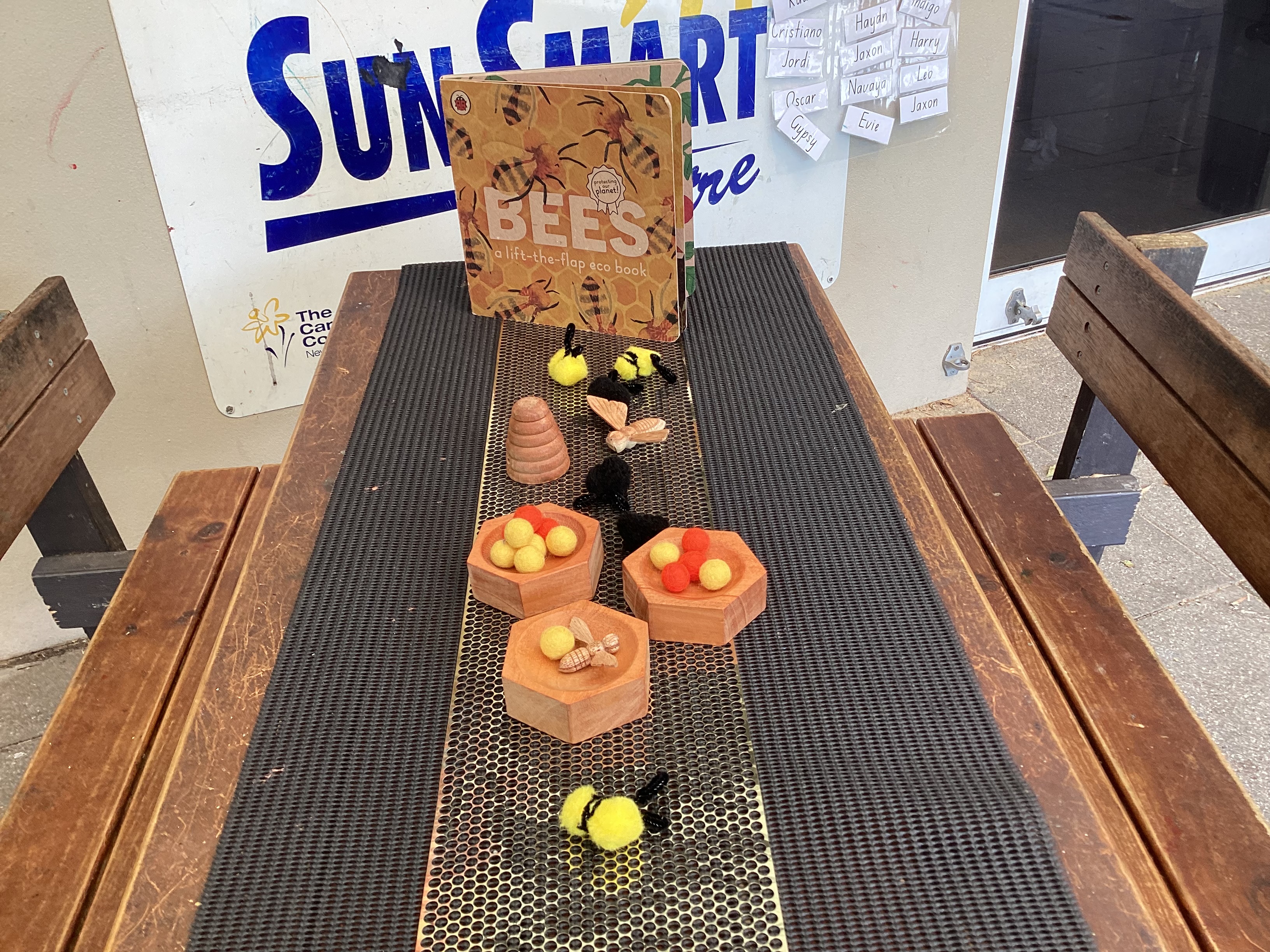
Deep Project Involvement: Engaging in sustained research and investigation that builds high-order thinking and attention span.
-
Expressive Language & Communication: Posing complex questions, debating theories with peers and educators, and sharing learning stories.
-
Holistic Literacy Skills: Developing phonological awareness, notions of print, and drawing/writing to map out project ideas and document learning journeys.
-
Contextual Numeracy Skills: Developing number sense, sorting, pattern recognition, and mathematical concepts organically through real-world investigations.
-
Self-Help & Independence: Assuming greater responsibility for their own possessions, bodily needs, risk management, and taking ownership of their learning path.
-
A Sense of Belonging & Identity: Feeling rooted in place and community, fostering the emotional resilience required for new environments.
Our educators give parents comprehensive documentation regarding their children’s readiness for school, including a Transition to School report that is forwarded to the school of your choice.
Commitment to our Environment
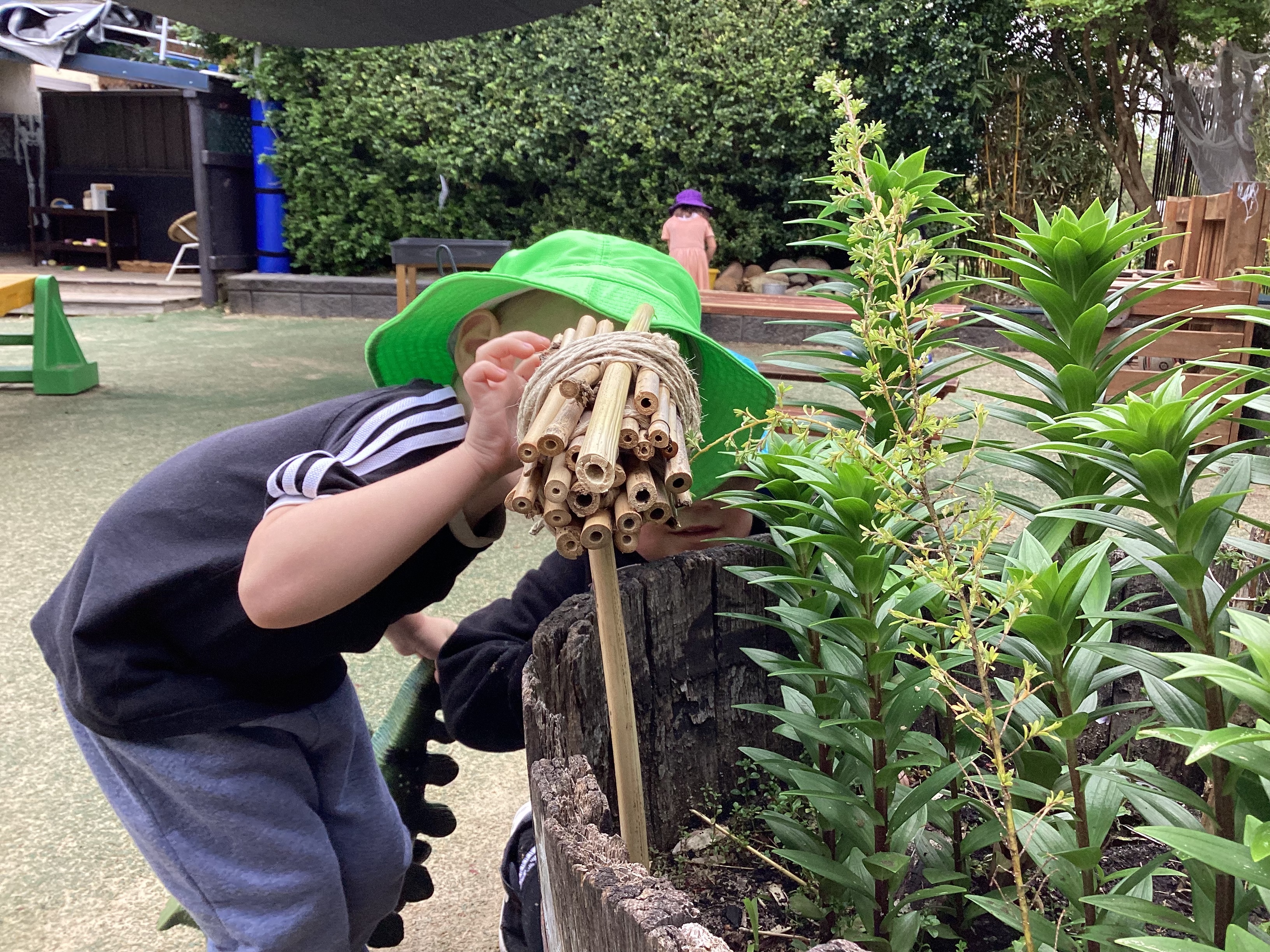
Waves Early Learning has a strong commitment to environmental education and sustainability.
Education for sustainability aims to nurture a sense of responsibility, respect, empowerment, active participation, enquiry, and social transformation in order to foster positive change. Not only for the present but also for future generations.
Within our curriculum, education for sustainability focuses on our shared Aboriginal history of land connections and reconciliation; biodiversity, gardens and animals; environmental health; growing our own food, responsible use of water, and energy, waste minimisation, fair trade, and the sharing of resources.
Early childhood is the optimal period to involve children in education for sustainability and instil in them lifelong habits that encourage mutual respect and the preservation of our planet.
Every day, the children at Waves engage in environmentally responsible actions. Education about sustainability has strengthened our bonds with children, families, and the community.
Culturally Responsive Pedagogy: The 8 Ways of Learning
To support a holistic, grounded practice, we embed the 8 Ways of Aboriginal Learning framework throughout our daily curriculum. By embracing these interconnected Aboriginal perspectives and ways of knowing, being, and doing, we honour Country and support children to connect learning with culture, place, and community in authentic ways. We bring this to life through:
-
Story Sharing: Approaching learning through narrative, yarn circles, and personal reflection.
-
Learning Maps: Explicitly mapping out our learning journeys and visualising processes.
-
Non-Verbal: Using self-reflection, observation, and hands-on, experiential learning.
-
Symbols & Images: Integrating visual metaphors and artistic patterns into our projects.
-
Land Links: Drawing direct learning and ecological connection from the Dharawal land we play on.
-
Non-Linear: Encouraging lateral thinking, embracing diverse perspectives, and making unexpected connections.
-
Deconstruct/Reconstruct: Breaking ideas down to their core parts and building them back up together.
-
Community Links: Connecting our classroom discoveries to local community, Elders, and families.
In this continuous, responsive cycle of project work, our educators play a vital role as co-learners, facilitators, and reflective observers—nurturing capable, confident, and resilient learners.